
Hingeback Tortoise
Kinixys spp.
Intermediate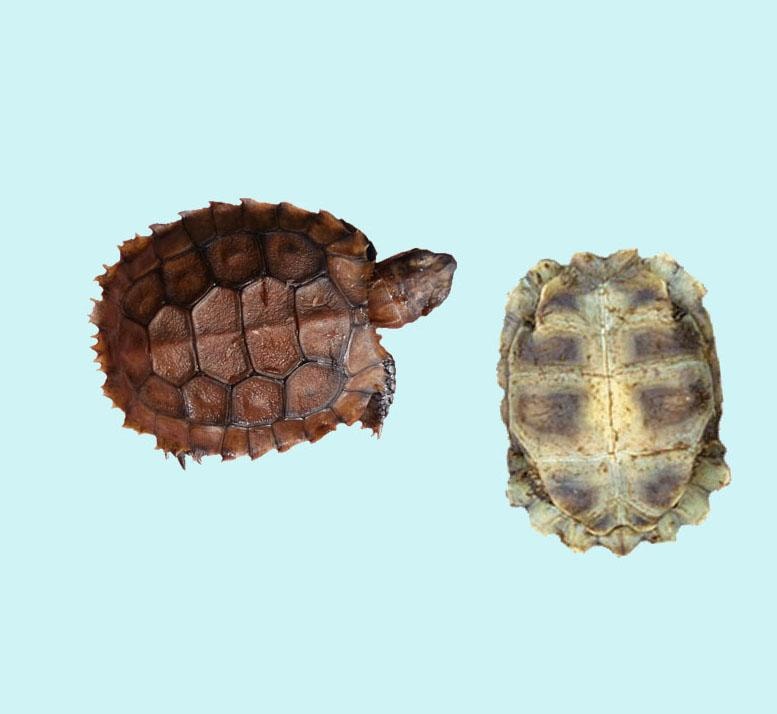
Identification
The Home's Hingeback Tortoise is also known as the Forest Hingeback Tortoise and is a subspecies of the African Hingeback Tortoise. The African Hingeback Tortoises are often mistaken for Box Turtles. While the African Hingebacks only have one hinge in their shell, on the carapace, which allows them to close only the back half of the shell, Box Turtles have two hinges on the plastron that enable them to close their entire shell tightly. Forest hinge-back is certainly one of the most unusual looking tortoises. Patterned with brown and yellow markings on the carapace, many have bright yellow heads. The Home's Hingeback Tortoise is distinguished from other Hingeback Tortoises by its shell, which is quite angular and comes to an abrupt end at the back. The shape of the carapace also cleverly channels rainwater towards its head for drinking. Adults are not too large and reach 7-12 inches from front to back.
Range
Home's Hingebacks inhabit the tropical swamps; tropical and subtropical lowland forests of West Africa, from Liberia, east to Cameroon, and in the Democratic Republic of the Congo.
Diet
The Home's Hingeback Tortoise is omnivorous and primarily insectivorous, meaning while they eat both plant and animal material, the majority of their diet is insect-based. Some common foods they eat in the wild are fruit, grass, plants, slugs, millipedes, and snails. In captivity they will enjoy mealworms, earthworms, snails and many other invertebrates. Live food should make up 50% of the diet. The other 50% of their diet should include mushrooms, sweet potatoes and at least a few of the following fruits and vegetables; collard greens, mustard greens, red leaf lettuce, green leaf lettuce, romaine lettuce, dandelion greens, hibiscus leaves and flowers, green onions, spinach, green beans, zucchini, frozen mixed vegetables, apples, bananas, strawberries, figs, peaches, mango, papaya, cantaloupe, grapes, blackberries, and blueberries. A mixed diet of these food items, five to seven times per week, is ideal and will ensure proper growth and health.
Notes
They live in tropical forests and streams in Africa, they are quite shy and do not do well with bright lights. It prefers moist areas! Home's actively thermoregulate and take advantage of areas with heavy vegetation to prevent overheating in tropical temperatures. Their large, dark, sensitive eyes offer a clue to their preference for lower light areas and times of the day. Average ambient temperatures range from 81°F to 91°F. The low light areas of heavy undergrowth that Homes regularly inhabit are cooler in temperature than the ambient air temperature, due to the respiration of plants and evaporation of moisture. Diurnal temperatures in their natural habitat rarely drop more 9°F in difference of daytime temperature.
The forest hinge-back tortoises are an interesting species that can be challenging pets for the first time tortoise owner. They are very shy in general and will not do well in high travel areas. They require a higher level of care and attention to their enclosure. Once they become familiar with their environment they can develop very unique personalities and become a bit more social.
Interested in an African Tortoise?
Contact us to learn more about availability, pricing, and care requirements.