
Radiated Tortoise
Astrochelys radiata
Advanced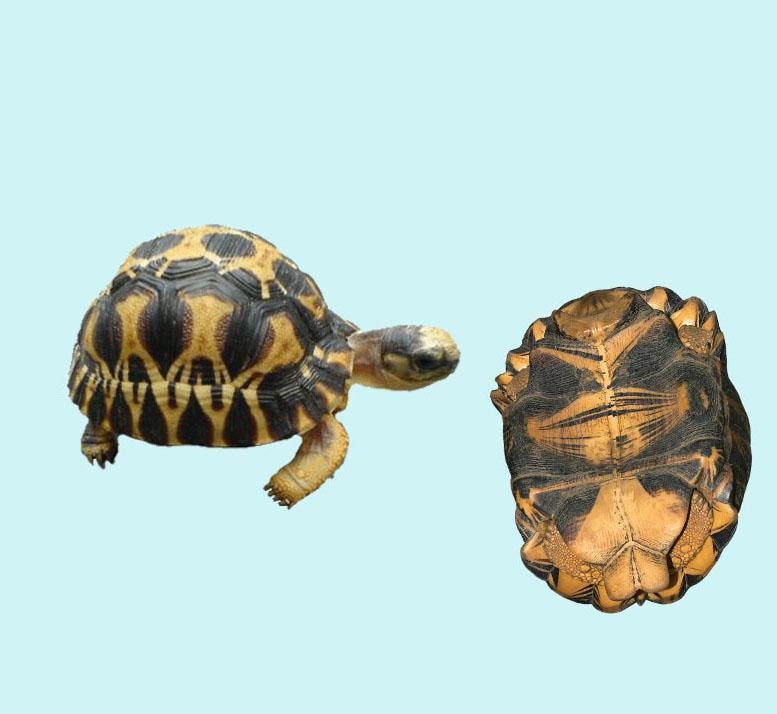
Identification
The Radiated Tortoise is widely regarded as one of the most beautiful tortoise species in the world. Its high-domed carapace is jet black or very dark brown, with brilliant yellow lines radiating outward from the center of each scute — a pattern so striking it gives the species its common name. The plastron is yellow with dark triangular blotches along the midline seams. The head, neck, and limbs are yellow, often with small dark spots. Hatchlings display the same vivid patterning as adults, though the contrast tends to intensify with age. Adults typically reach 13 to 16 inches in length and weigh between 20 and 35 pounds.
Range
Radiated Tortoises are endemic to the island of Madagascar, where they are found primarily in the dry spiny-forest regions of the southwestern and southern portions of the island. Their range extends from the Mahafaly Plateau in the west to the Androy region in the south. They inhabit areas dominated by Didiereaceae — the spiny, cactus-like plants unique to Madagascar — as well as dry scrub and grassland. They are not found naturally anywhere else in the world, though small feral populations exist on the nearby islands of Réunion and Mauritius, introduced by early settlers.
Diet
In the wild, Radiated Tortoises are primarily grazers and browsers, feeding on grasses, succulent plants, and the pads and fruits of Opuntia cactus. In captivity, the bulk of their diet should consist of a variety of grasses and grass hay, supplemented with dark leafy greens such as dandelion greens, endive, escarole, and turnip greens. Occasional offerings of fruits — particularly cactus pads, figs, and berries — are relished and provide enrichment. Calcium supplementation is important, especially for growing animals. Cuttlebone or a light dusting of calcium powder on greens two to three times per week is recommended. Avoid high-protein foods such as legumes, dog food, or animal protein, as these can cause pyramiding of the shell and kidney damage over time. Fresh water should always be available, and shallow soaks two to three times per week help maintain hydration, particularly for juveniles.
Notes
These tortoises are critically endangered due to habitat loss, being poached for food, and being over exploited in the pet trade. It is listed on CITES Appendix I, commercial trade in wild-caught specimens is illegal (permitted only in exceptional licensed circumstances). However, due to the poor economic conditions of Madagascar, many of the laws are largely ignored.
Still extremely rare and endangered. The native peoples of Madagascar eat these beautiful creatures. In order to improve soil fertility, the Madagascar native people burn crops, inadvertently killing 100's to 1000's of eggs causing a huge decline in Radiated population numbers.
Interested in an African Tortoise?
Contact us to learn more about availability, pricing, and care requirements.