
Sulcata Tortoise
Geochelone sulcata
Identification
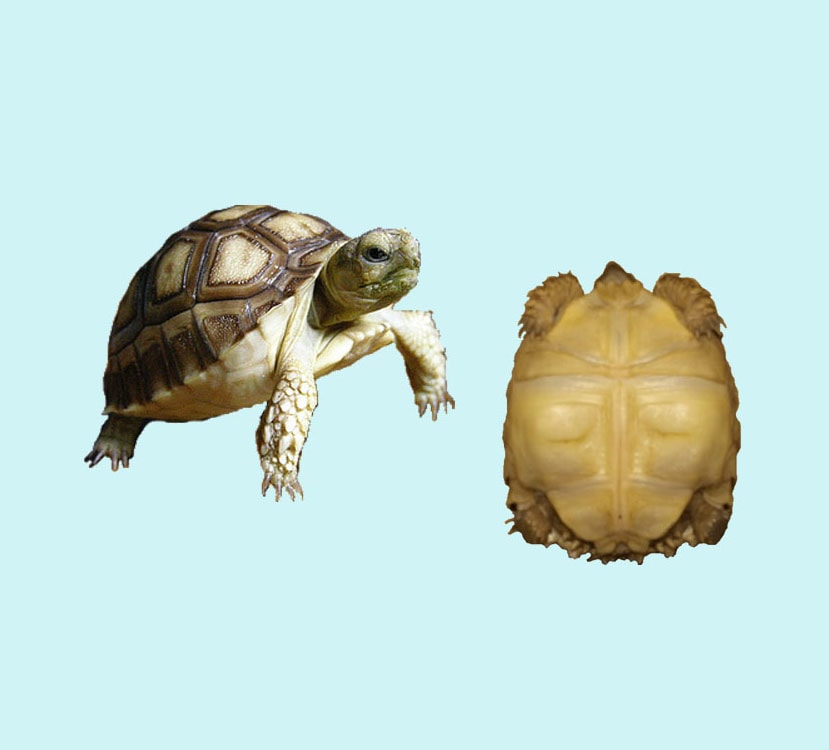
The carapace (top shell) is tan to yellow in color in the center of each scute (the external plate or scale of the shell). Each scute is outlined by brown growth rings. The plastron (bottom shell) is light tan to yellow in color with no markings. The skin of African Sulcata Tortoises is very thick and the legs are covered in dull, spine-like projections. The prominent spurs on the rear legs serve no observable function.
Range
Inhabits the southern edge of the Sahara desert, in northern Africa.
Diet
African Sulcata Tortoises have voracious appetites. Providing a proper diet is critical for Sulcata Tortoise health. They require a diet high in fiber and calcium and low in fat and protein. In the wild, Sulcatas graze, similarly to cows or sheep, and the desert vegetation is often coarse and of poor nutritional quality. Offering a diet of higher nutritional quality can lead to malformations of the shell, too rapid of growth rate, diarrhea, and other problems. Grass hay or hay flakes most closely resemble their natural vegetation.
Grass hay and hay flakes may be bought commercially or grass pasture seed may be purchased and grown. Clover is another source of forage. Dark green leafy vegetables should be offered, but should make up less than 25% of the diet. Appropriate items include turnip greens, endive, escarole, dandelions, and small amounts of romaine lettuce (not iceberg lettuce). Spinach, beet greens, carrot tops, kale, broccoli, and especially rhubarb, contain high amounts of oxalates which bind calcium, so these should be offered in limited quantities, if at all.
Notes
C. sulcata is the third-largest species of tortoise in the world after the Galapagos tortoise, and Aldabra giant tortoise, and the largest of the mainland tortoises. Adults are usually 24 to 36 in long and can weigh 100–200 lbs. They grow from hatchling size (2–3 in) very quickly, reaching 6–10 in (15–25 cm) within the first few years of their lives.
Due to their reputation for having a pleasant temperament, sulcata tortoises are sometimes kept as pets, despite presenting significant challenges.
Per CITES, a zero annual export quota has been established for C. sulcata for specimens removed from the wild and traded for primarily commercial purposes. Due to excessive captive breeding and removal from the wild, many rescue centers are full and unable to accept more. American Tortoise Rescue discourages the breeding and selling of the species.
Sulcatas are active and like to burrow, climb and roam about, often in search of food. They are extremely strong animals and have been known to break down fences and even walls. They are very attracted to items with bright colors and will attempt to move through anything between the attraction and themselves.
African Sulcatas can be handled gently when they are young. They often get too large and heavy to be handled when they are juveniles and adults. A brightly colored edible flower or piece of fruit can be used as a lure if you need to move them. Avoid pinning them down or restricting them. Allow them to carry on in their intended way, especially when they're young. Older sulcatas are usually pretty tolerant of people.
Interested in an African Tortoise?
Contact us to learn more about availability, pricing, and care requirements.