
Elongated Tortoise
Indotestudo elongata
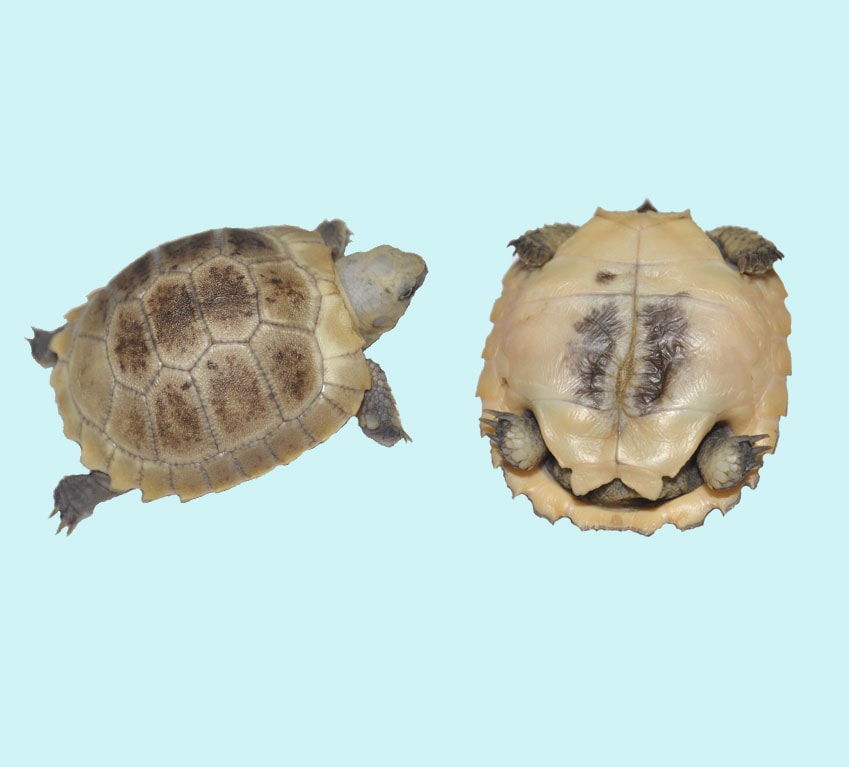
Identification
The ground color of the shell is caramel colored to dark yellowish brown, with blotches of black on each scute — this can be variable with some tortoises appearing totally caramel colored and others nearly completely black. Large scales cover the anterior parts of the front legs, while the hind legs lack this protection. The soft parts of this species are gray to yellow. The head is yellow/tan except in breeding season where both sexes take on a pinkish coloration around the nares and eyes.
Range
This tortoise's natural range includes Thailand, India, Bangladesh, Nepal, south China, Myanmar, Laos, Vietnam, Malaysia and Kampuchea.
Diet
In their natural habitat these tortoises browse a wide variety of plants. Likewise in captivity, they require a very wide range of foods, not just one type of vegetable. Their diet is principally a range of vegetables and edible leaves, however they also consume meat, snails, eggs and other food types. This serves to supplement their diet. Vegetables alone are not sufficiently varied.
Notes
This tropical species does not survive in cold climates. Those exported to Europe and North America for the pet trade usually suffer, and soon die, if they are not given special indoor care. They also require a constant water source, for bathing and drinking. Being reptiles, which cannot control their body temperature internally, they require a varied area in which they can access both sun and shade. This allows them to move around and thus to regulate and maintain their body temperature constant. Peak activity is often seen following heavy, warm, summer rain.
The Elongated tortoise is commonly found in the Asian food markets and as a result of this is under dire pressures in its entire range. It is the most common tortoise shipped to the Chinese food markets from Vietnam.
Here's the perfect tortoise to keep with your Red Footed and Yellow Footed Tortoises. They are just as tropical, eat the same foods, like the same temps and high humidity — stay the same sizes, get along with everyone, and they look very different — and very handsome.
Interested in an Asian Tortoise?
Contact us to learn more about availability, pricing, and care requirements.