
Indian Star Tortoise
Geochelone elegans
Identification
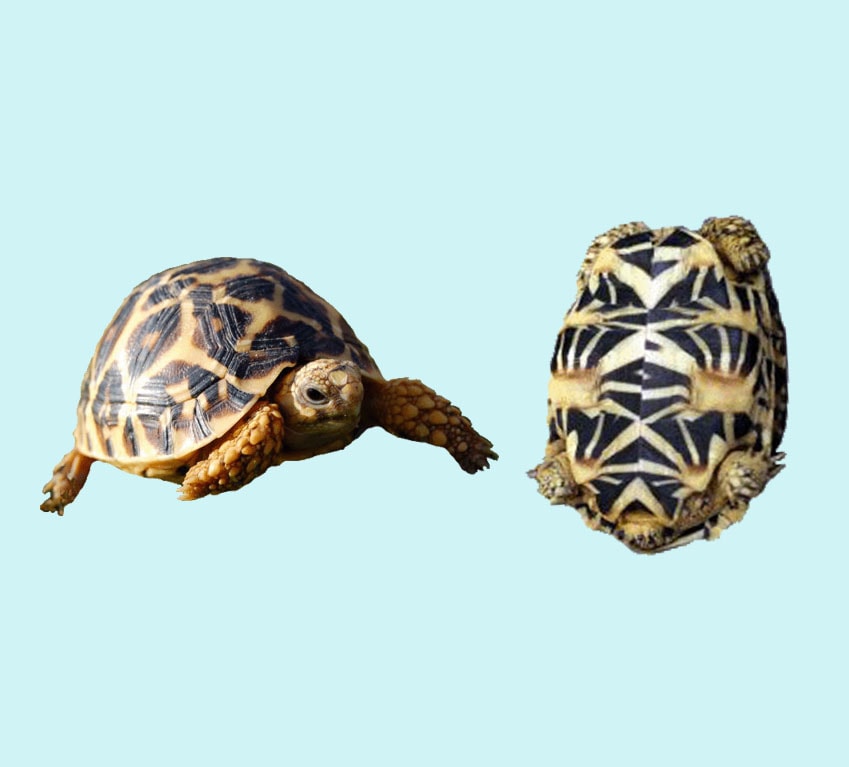
The shell of the Indian star tortoise is broad and finely detailed. It's comprised of several concentric scutes. Each scute is raised, creating a beautiful ridged appearance. Surrounding the central scutes is an apron of smaller ones around the perimeter. Those scutes flare out slightly from the carapace for added protection. The Indian star tortoise gets its name from the distinct pattern on the carapace. The base color of the shell is dark brown or black, and each scute is lined with bright yellow streaks. The streaks radiate from the center, creating a star-like pattern that's undeniably beautiful. On the bottom of the shell, these tortoises have a lighter-colored plastron. It's usually devoid of the star pattern. The body of the tortoise is equally stunning. The head, tail, and legs are all covered in protective tan scales. The head is relatively smooth, but it features a hooked beak for breaking down food.
Range
The Indian star tortoise (Geochelone elegans) is a threatened tortoise species native to India, Pakistan and Sri Lanka where it inhabits dry areas and scrub forest.
Diet
Star tortoises are herbivores. Give plenty of fresh and dark leafy greens and grasses. Timothy hay, Bermuda grass, orchard grass, ryegrass, alfalfa, and fescue are all acceptable. Never feed your Indian star tortoise dog or cat food. Fresh greens suitable for tortoises include kale, endive, parsley, dandelion greens, escarole, spineless cactus leaves, and mustard greens; these greens have a higher calcium-to-phosphorus ratio, which is healthier for the star tortoise. Dust an additional calcium powder on their greens daily. Occasionally, you can offer a small bit of fruit as a treat. Feed it once daily at the same time every day from several food trays spread throughout the enclosure to replicate foraging. Give them as much food as they will eat within 15 to 30 minutes, or you can estimate the pile of food to offer as about the size of the animal's shell.
Notes
There's no denying the beauty of the Indian star tortoise. This species (scientifically known as Geochelone elegans) is one of the most sought-after in the reptile scene. Known for their gorgeous shell and docile nature, the tortoise is a favorite among collectors and hobbyists. Unfortunately, the popularity of this species has led to the endangerment of wild populations. Luckily, the species is now protected, with local laws prohibiting exportation. Breeders have seen success as well, resulting in a healthy population of captive-bred tortoises to support the demand.
The average size of an Indian star tortoise is between seven and 12 inches. With that being said, size can vary based on gender and what area the tortoise is native to. For example, those from mainland India tend to be slightly bigger than those with ancestral roots in Sri Lanka or Pakistan. Females are always the larger of the sexes. Females will typically grow a good two to three inches longer than males, making them easy to distinguish.
The typical Indian star tortoise lifespan is between 30 and 55 years. It has been listed as Vulnerable on the IUCN Red List since 2016, as the population is thought to comprise more than 10,000 individuals, but with a declining trend. It is threatened by habitat loss and poaching for the illegal wildlife trade. It was upgraded to CITES Appendix I in 2019 by full consensus among all member states, giving it the highest level of international protection from commercial trade.
Interested in an Asian Tortoise?
Contact us to learn more about availability, pricing, and care requirements.