
Russian Tortoise
Agrionemys horsfieldii
Identification
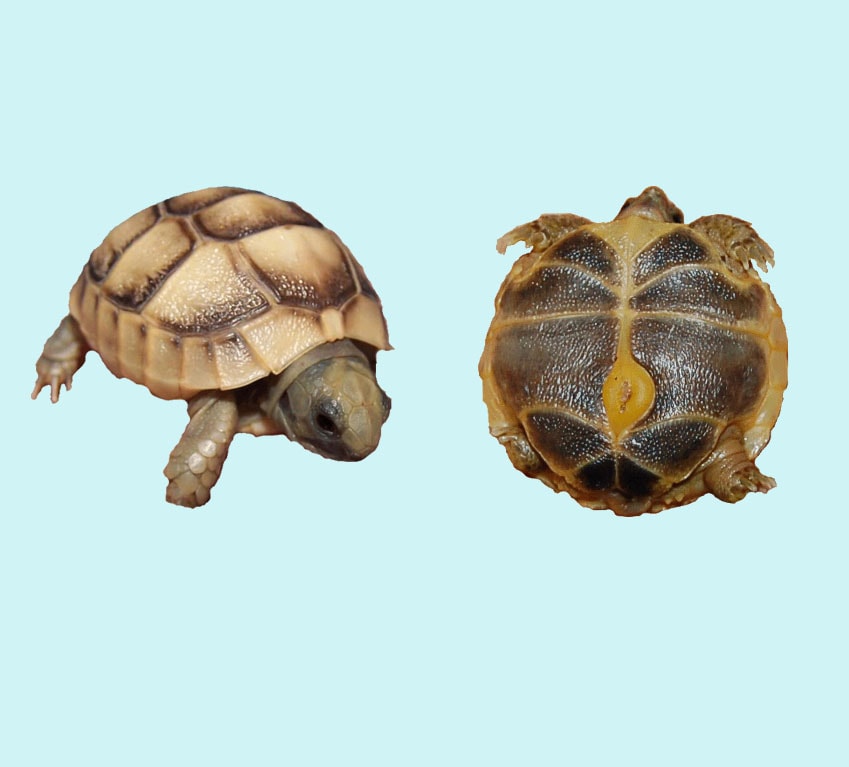
Coloration varies, but the shell is usually a ruddy brown or black, fading to yellow between the scutes, and the body is straw-yellow and brown. They have four toes.
Range
It is found in Afghanistan, Northern Pakistan, Northern and Eastern Iran, North Western China and the Soviet territory Kazakhstan. Most Russian Tortoises found in the pet trade are from the territory of Uzbekistan.
Diet
Russian tortoises prefer broadleaf weeds and eagerly eat almost any leafy greens offered to them. Regularly use tortoise-safe organic weeds, flowers and herbs. Choose high-fiber, low protein plants. If wild-grown weeds and greens are not available, you can supplement with store-bought greens such as kale, collard greens, turnip greens, mustard greens, and any of the darker lettuce types. Vegetables should only be fed very rarely, e.g. a small piece of carrot or pumpkin once monthly or less. Fruit should be avoided altogether. Animal protein should never be fed to a Russian tortoise, as it can cause kidney failure. High starch foods such as corn and potatoes should not be fed, either, as the starch is broken down into sugar, and will cause similar problems to fruit, in addition to causing obesity.
Notes
In its natural habitat the Russian tortoise is active only a few months of the year. It comes out of hibernation in mid-March and actively forages and mates until mid-June. During the hottest parts of summer it aestivates. In Uzbekistan it hibernates from October through March. It is most active in the early morning and early evening, retreating to its burrows during the hottest portion of the day. Russian tortoises are most active when the temperatures range 20–32°C.
A popular pet tortoise, Russian tortoises are one of the most readily available tortoise species in the USA. Most pet Russian tortoises are currently imported into the United States. Compared to the number of imported tortoises, captive production of this species is relatively low. You should assume that most adult or sub-adult Russian tortoises for sale are imported unless otherwise stated. All of our baby tortoises are captive bred in the USA. Currently, they are not classified as endangered, unlike most other tortoise species. Although they are small, Horsfield's tortoises do need extensive outdoor space and indoor habitat where they can dig and climb safely. A healthy animal is curious, eager to eat, and more active than some other tortoise species. They are also very territorial and can be aggressive towards others of their kind, so Russian tortoises should not be kept in a small space with another tortoise.
Interested in a Mediterranean Tortoise?
Contact us to learn more about availability, pricing, and care requirements.