
Redfoot Tortoise
Chelonoidis carbonarius
Beginner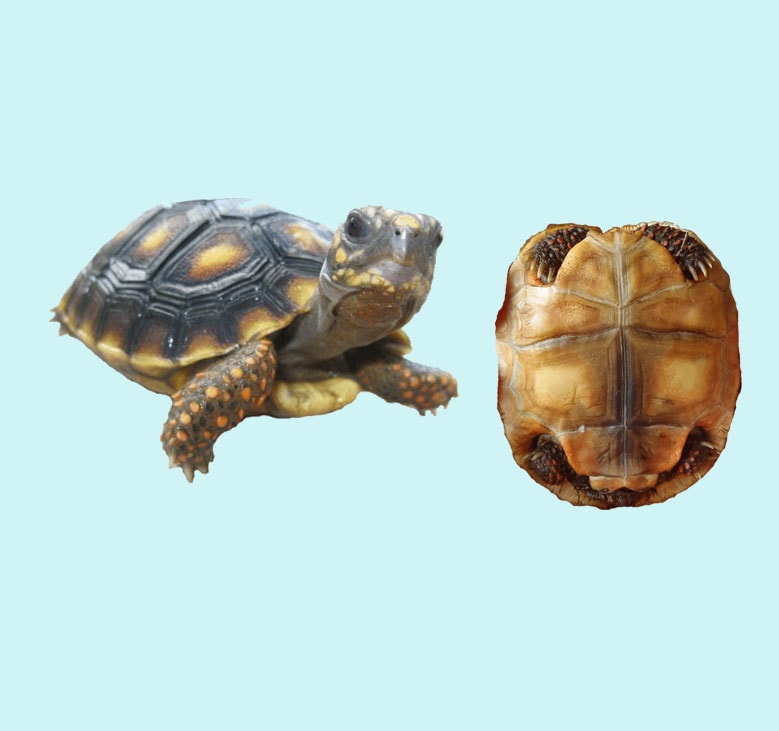
Identification
The males are larger with a very concave plastron. The males also have a narrow mid section giving them the appearance of a waist. Color is variable. Some have intense red scales on the legs (hence the name) and head, while others are more yellow. In adults the carapace scutes are very dark brown to black with a yellow center. Hatchlings' shells are more yellowish brown. Males are usually slightly more colorful than females, and colors vary by region.
Range
The Redfoot Tortoise originates from central and northern South America and Central America. It has also been introduced to several Caribbean islands.
Diet
Redfoot Tortoises are opportunistic grazers and enjoy broad leaf plants. However they also eat overripe fruit and carrion, insects, etc. The best diet is one that contains a wide variety of weeds (leaves and flowers), greens, vegetables, and fruit.
Notes
Most species of tortoise spend much of their day inactive, and red-footed tortoises generally spend over 50% of the daylight hours at rest. They may rest for even longer after a large meal, with five to ten day stretches being common.
They seek shelter in places that offer thermoregulation and protection from predators. Treefalls are a favored site, as are debris piles, burrows (especially those of the armadillo), hollow logs, holes, and heavy vegetation cover. They generally try to find tight-fitting resting places, and will occasionally 'wedge' themselves between roots and trunks but remain otherwise exposed.
Shelters are often communal with as many tortoises as can fit in the space. Good shelters are so important, and visibility is so poor, that the tortoises will leave scent trails that they or others can follow. Some shelters are so heavily used by tortoises that there are clear trails in the dirt leading to them, even though individual tortoises may not return to a given shelter regularly.
Besides communal shelters and scent marking, red-footed tortoises also show other signs of semi-social behavior such as lack of aggression at feeding sites, not protecting territory, and group feeding at fruit falls and carrion. Red-footed tortoises often follow each other, usually a smaller one following a larger, and have been observed following apparent scent trails laid by an individual a day or two earlier.
Also called 'red-foot', 'red-legged', or 'savanna tortoise'. One of the most popular and widely kept South American tortoise species.
Interested in a South American Tortoise?
Contact us to learn more about availability, pricing, and care requirements.