
Pink Belly Side-Neck Turtle
Emydura subglobosa
Beginner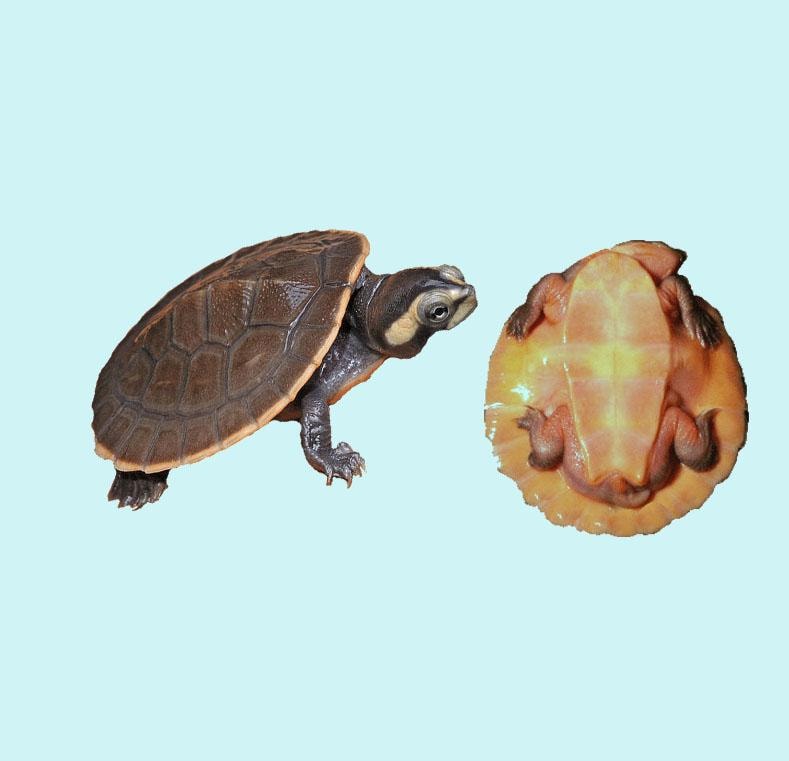
Identification
Its shell ranges in color from beige to chestnut brown or slate gray. The plastron can be white, pink or, in the case of especially prized specimens, bright red/orange. The skin is typically various shades of gray, with some red markings. As pink-bellied side-necks grow, their skin develops additional random red/orange markings. Hatchlings are born with an attractive white, yellow or orange ring at the outer edge of their marginal scutes. Their heads are gray to olive green with two bold yellow stripes on either side. The curved lower jaw gives this turtle a permanent smile.
Range
These turtles are found at the northern tip of the Cape York Peninsula in Australia and the island of New Guinea.
Diet
In the wild, these turtles feed primarily on crustaceans, mollusks and aquatic insects that share their river habitat. While commercial turtle pellets and cut fish are adequate, pink-bellied side-necked turtles also enjoy a variety of vegetables, worms, chicken and lean beef.
Notes
Emydura subglobosa is referred to as a "side-necked" turtle because it pulls its head sideways rather than straight back to retreat into its shell.
These turtles swim fast and are very active, especially in warmer water, but will become less active if water temps fall below 65 degrees.
Once the rarest of turtles in the United States, pink-bellied side-necks are now being bred successfully by several U.S. breeders to the point where the growing demand by U.S. keepers is met every year. The turtle is legal to keep in all U.S. states. It is one of the few that Oregon allows, and Hawaii allows them too, but keeping them there requires a special permit.
Pink-bellied side-necked turtles are tough and unlikely to be bothered by other turtles, other than snappers and large musk turtles. They also don't typically bother other turtles. The pink-bellied side-neck truly is one of the best community turtles available.
Interested in a Side-Neck or Snake-Neck Turtle?
Contact us to learn more about availability, pricing, and care for these unique species.